
What Qualifications Do I Need to Work With Aesthetic Technology?
There isn’t one qualification that applies to everyone working with aesthetic technology. The right starting point depends on your existing experience and qualifications, and Lynton Academy can help you understand what is best for you with tailored advice. For those new to aesthetics, Lynton’s VTCT Level 3 Certificate in Access to Aesthetics provides a recognised foundation before progressing into specialist device training.
If you’re considering working with aesthetic technology, it can be difficult to know which qualifications you actually need.
You may have seen courses covering , as well as training in specific technologies such as laser, IPL, HIFU and skin needling.
What do you actually need to get started?
Is there one qualification for aesthetic technology?
No. Your training pathway will depend on your background, the treatments you want to provide and the technology you plan to work with.
For someone completely new to aesthetics, starting with a strong foundation is important. This gives you an understanding of anatomy, skin, consultation, health and safety and the science behind aesthetic treatments before progressing into more specialised areas.
At Lynton Academy, the has been developed specifically to provide a clear entry point for people without a traditional aesthetics background.
If you’re unsure which qualification or training route is right for your experience, get in touch with the Lynton Academy team to discuss your options.
What qualification should I start with if I’m new to aesthetics?
If you don’t have a traditional Level 3 beauty qualification or previous aesthetics experience, the qualification can provide a structured starting point.
Lynton Academy’s course is designed for:
- People entering aesthetics without a Level 3 beauty background
- Career changers
- Medical professionals building their foundational aesthetic knowledge
- New practitioners looking for a clear starting point
The qualification covers core areas including anatomy and physiology, skin analysis and facial treatments, consultation and record keeping, health and safety, and electrical science.
This foundation is particularly valuable if you’re planning to progress into energy-based treatments, where understanding the science behind the technology is an important part of training.
Explore Lynton’s Level 3 Access to Aesthetics course
Do I need a Level 3 beauty qualification?
Not necessarily.
This is one of the most common questions for people considering a move into aesthetics.
Lynton’s Level 3 Access to Aesthetics qualification was created for people without a traditional Level 3 beauty background, providing an alternative entry route into aesthetics.
However, if you already hold relevant qualifications, your route may be different.
For example, Lynton’s
This is why it’s important to check the entry requirements for the specific treatment or technology you want to train in. Call us to have a chat and discuss your needs on 01477 536977.
What qualifications do I need for laser and IPL?
Laser and IPL treatments require specific knowledge and training, and the requirements can vary depending on the treatment, your existing qualifications and the requirements of your insurer or local arrangements.
For example, Lynton’s requires a one of several suitable backgrounds, including Level 3 Beauty Therapy, a nursing or medical degree, or Level 3 Access to Aesthetic Therapies (or equivalent).
This demonstrates why your training shouldn’t be viewed as a single qualification that covers everything.
Instead, think about your training as a progression pathway.
A typical pathway might look like:
Foundation knowledge → Level 3 qualification → Specialist device training → Further qualifications and CPD
Your individual route may be different depending on your background. Call Lynton Academy for more tailored advice on 01477 536977.
What is Core of Knowledge?
If you’re interested in laser and IPL, you’ll likely come across the term
This refers to essential knowledge around laser and light safety and the scientific principles relevant to using these technologies.
Lynton offers a , developed in conjunction with The University of Manchester and designed as a scientific foundation for safe, confident practice.
It’s an important part of understanding the technology rather than simply learning how to operate a particular device.
Do medical professionals need Level 3 Access to Aesthetics?
Not always.
Your existing medical or clinical qualifications may mean you already meet some of the requirements for progressing into further aesthetic training.
Lynton specifically notes that some medical professionals may already meet the anatomy and physiology requirements to progress without completing the Level 3 Access to Aesthetics qualification.
If you’re a medical professional considering aesthetic technology, it’s therefore worth discussing your existing qualifications with the training provider before booking.
Why is choosing the right training important?
Aesthetic technology is more than knowing how to operate a device.
Good training should help you understand:
- The science behind the technology
- The skin and tissue being treated
- How to assess clients appropriately
- Treatment considerations
- Safety and risk
- How to apply your knowledge in practice
At Lynton Academy, training is built around science, clinical expertise and hands-on learning, with qualifications regulated by OFQUAL and courses developed in conjunction with organisations including The University of Manchester.
Lynton also brings more than 50 years of experience in aesthetic technology into its training approach. Every member of our Clinical Training team has the kind of industry creds that could fill their own page. With multiple PhDs and qualifications, published articles and books, lectures, success stories and hours of real-world experience.
How do I choose the right aesthetics training academy?
Choosing the right training academy is just as important as choosing the right qualification. Look for a provider with recognised qualifications, experienced trainers, strong scientific foundations and a clear pathway for developing your skills.
Lynton Academy is an established provider of aesthetic training, combining scientific expertise, clinical experience and practical education. Lynton works with organisations including VTCT and The University of Manchester, offering recognised qualifications and a range of training pathways for learners at different stages of their aesthetic journey.
With courses spanning foundation-level training through to specialist aesthetic technologies, Lynton Academy can support learners as they develop their knowledge and skills.
Lynton’s approach is also backed by its longstanding experience in aesthetic technology. The company originated from research at The University of Manchester and continues to bring scientific and clinical expertise into its training.
When choosing an academy, consider not just the qualification you’ll receive, but who is delivering your training, how you’ll learn, the practical experience you’ll gain and where the course can take you next.
Ready to explore your options? Contact Lynton Academy to find out more about our aesthetic technology training and the courses available for different levels of experience.
FAQs
What should I look for when choosing an aesthetics qualification?
Before booking a course, consider the qualification itself, the training you’ll receive and where it can take you next. At Lynton Academy, these are all built into the training experience.
Is it a recognised qualification?
Look for regulated qualifications where appropriate and understand exactly what certification you’ll receive. Lynt Academy’s VTCT Level 3 Certificate in Access to Aesthetics (ITEC) is an OFQUAL-regulated qualification, providing a recognised foundation for those looking to enter the aesthetics industry. Lynton Academy is also a VTCT Accredited Provider, giving learners confidence that their qualification meets recognised standards.
Does it match your experience?
Check the entry requirements rather than assuming every course is suitable for beginners. Lynton’s Level 3 Access to Aesthetics course has been specifically designed as an entry route for people who don’t have a traditional Level 3 beauty background, including career changers, new practitioners and medical professionals. This means you can start at a level that matches your existing knowledge and experience.
Does it include practical training?
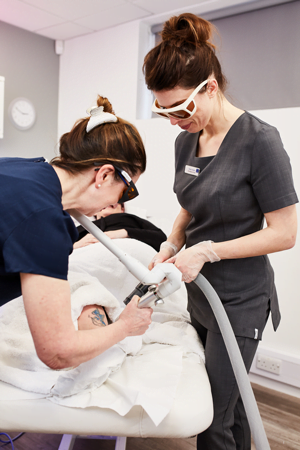
Hands-on experience is an important part of developing confidence and applying your knowledge. Lynton’s Level 3 course combines online learning with two practical training days at Lynton Academy, where learners complete hands-on facial treatments and practical assessments. Training takes place in a clinical environment, helping you put the theory into practice under expert guidance.
Does it give you a progression route?
Consider what you can train in next once you’ve completed the course. Lynton’s Level 3 Access to Aesthetics qualification is designed to provide a foundation for further study, with learners able to progress into specialist Level 4 training such as Laser & IPL, Skin Needling and HIFU, subject to the relevant entry requirements. This gives you a clear pathway as your knowledge and skills develop.
Who delivers the training?
Look at the experience and expertise of the trainers, as well as the organisations involved in developing the course. This is where Lynton Academy’s experience really matters. Lynton’s training is delivered by experienced clinical educators and practitioners, with the Academy’s wider clinical team including PhD-qualified scientists and experienced professionals. Lynton also works with organisations including VTCT and The University of Manchester, bringing scientific research, clinical expertise and real-world experience into its training.
If you’re unsure which qualification or training route is right for you, make an enquiry with the Lynton Academy team to discuss your experience and explore your options.
Where can Level 3 Access to Aesthetics take me?
This gives you a structured approach to developing your knowledge:
Build your foundations → Develop specialist skills → Gain practical experience → Continue your professional development
Ready to start your journey into aesthetic technology? Explore the VTCT Level 3 Certificate in Access to Aesthetics (ITEC) or make an enquiry with the Lynton Academy team to find out which training route could be right for you.
Last reviewed: August 2026


