A Beginner’s Guide to Aesthetic Device Training in 2026
If you’re completely new to aesthetics and want to work with aesthetic technology, the best place to start is with a recognised foundation qualification that builds your understanding of anatomy, skin, consultation, safety and the principles behind aesthetic treatments. From there, you can progress into device-specific training that matches your experience and professional goals.
If you’ve started researching aesthetics, you may already have discovered just how much there is to learn. Laser, IPL, skin needling, HIFU and other technologies all have different applications and training requirements.
So where do you actually begin?
I’m completely new to aesthetics — can I still train?
Yes. You don’t necessarily need a traditional aesthetics background to start.
Lynton Academy’s provides a structured entry point for people new to aesthetics, including those without a Level 3 beauty background. It is designed to establish the knowledge and practical skills needed to progress into further aesthetic training.
The important thing is to start at the right level for your existing experience rather than trying to move straight into advanced device training.
What do I need to learn first?
Before progressing into specific technologies, it is important to understand the foundations that underpin aesthetic treatments.
These include:
- Anatomy and physiology
- Skin structure and function
- Skin analysis
- Consultation
- Health and safety
- Electrical science and the principles behind aesthetic technology
Lynton’s Level 3 Access to Aesthetics course combines approximately 80–100 hours of online learning with practical training and assessment at the Lynton Academy.
This gives beginners the opportunity to develop their knowledge before moving into more specialised areas.
Do I need a beauty qualification?
Not necessarily. Your starting point depends on your existing qualifications and experience.
Lynton’s Level 3 Access to Aesthetics course is designed for those without a traditional Level 3 beauty background. If you already have relevant medical or clinical qualifications, you may be able to take a different route.
If you’re unsure, speak to you’re a member of the Lynton Academy team before booking a course. They will be able to assess your existing qualifications and explain the most appropriate progression .
When should I start learning about aesthetic devices?
Once you’ve established the right foundation, you can start looking at the specific technologies and treatments you want to develop.
This could include areas such as:
- Laser and IPL
- Skin needling
- HIFU
- Tattoo removal
- Other energy-based aesthetic technologies
Entry requirements vary between courses, which is why choosing your first qualification carefully can make your next steps much clearer. Explore Lynton Academy’s aesthetics qualifications to see the different training pathways and entry requirements available.
Why does the science behind aesthetic technology matter?
Aesthetic technology is based on scientific principles. Understanding those principles helps you understand not only how a technology is used, but why it works and what needs to be considered when applying it.
Science has been part of Lynton’s foundations from the beginning. The company was founded at The University of Manchester by PhD scientists working with laser technology, and Lynton Academy continues to combine scientific knowledge with clinical expertise and practical experience.
Dr Samantha Hills, PhD, Clinical Director at Lynton and Honorary Lecturer at The University of Manchester, is part of the clinical training team bringing this expertise into aesthetic education.
For a beginner, this matters because good training should give you understanding, not simply instructions.
Why is practical training important?
Theory provides the foundation, but practical experience helps you apply it.
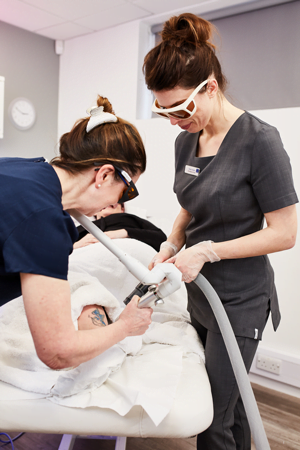
Hands-on training allows you to develop your technique, work through real treatment scenarios and learn directly from experienced trainers. Lynton Academy includes practical learning within relevant courses, with hands-on training taking place in a clinical environment.

What should I look for in an aesthetic training provider?
When you’re new to the industry, comparing training providers can be difficult. Course price and duration are only part of the decision. The quality of your training, the expertise of your educators and the support available afterwards can all make a difference to how confidently you develop your skills.
Look for:
- Recognised qualifications
- Experienced clinical trainers
- A strong scientific foundation
- Practical, hands-on learning
- A clear progression route
- Support after your training
Why choose Lynton Academy for aesthetic training?
At Lynton Academy, training is built around scientific knowledge, clinical expertise and practical experience. Our courses are designed to help trainees develop a strong foundation before progressing into specialist areas of aesthetic technology.
Our VTCT qualifications provide recognised, regulated routes into aesthetics, with Lynton Academy delivering OFQUAL-regulated qualifications through VTCT. This gives trainees a structured and credible way to develop their knowledge and progress through further training.
Lynton’s connection with The University of Manchester is also central to our approach. Lynton originated from research at the University of Manchester, and our training continues to bring scientific principles and evidence-based education into aesthetic technology.
Training is delivered by experienced clinical educators and practitioners, with expertise spanning science, aesthetics and clinical practice. The wider Lynton clinical team includes PhD-qualified scientists and experienced practitioners, with trainers bringing decades of combined industry and clinical experience into the Academy.
Practical learning is another important part of the Lynton experience. Where appropriate, courses include hands-on training in a clinical environment, allowing trainees to apply their knowledge under the guidance of experienced educators rather than relying solely on online or classroom theory.
Lynton also offers a range of qualifications and specialist training pathways, allowing practitioners to continue developing their skills as their experience grows. From Level 3 Access to Aesthetics through to specialist areas such as laser and IPL, skin needling and HIFU, entry requirements are clearly outlined for each course.
And the relationship doesn’t necessarily end when the course does. Lynton provides ongoing clinical support and education, helping practitioners continue developing their knowledge as they progress in their careers.
If you’re comparing training providers and want to understand which route is right for your experience, contact the Lynton Academy team to discuss your options.
What happens after foundation training?
There isn’t one route that suits everyone, but a typical progression could look like:
Foundation training → Recognised qualification → Device-specific training → Practical experience → Further education
For example, Lynton’s Level 3 Access to Aesthetics qualification can provide a foundation for progressing into further training, depending on your background and chosen treatment area.
You don’t need to decide on every future course before you begin. The important thing is to establish a solid foundation and then build your skills progressively.
What are the benefits of holding a Level 3 aesthetics qualification?
A recognised Level 3 qualification can benefit more than just your own knowledge and confidence. For clinics, having appropriately trained practitioners can help demonstrate professionalism, build client trust and create a stronger foundation for introducing or expanding aesthetic technology services.
Can a Level 3 qualification help build client trust?
Clients want to know that the person providing their treatment understands the skin, anatomy, safety considerations and principles behind the technology being used. Holding a recognised qualification can provide an additional level of reassurance and demonstrate that your clinic takes practitioner education seriously.
For a growing aesthetics business, this can become an important part of how you communicate your standards to prospective clients.
Can a Level 3 qualification support clinic marketing?
Your practitioners’ qualifications can form part of your clinic’s marketing and help you communicate the expertise behind your services. Whether included on your website, practitioner profiles or treatment information, relevant qualifications can help prospective clients understand the training and knowledge behind the treatments you offer.
A qualified team can also give you more to talk about when building awareness of your clinic and its approach to professional development.
Can better training help a clinic grow its treatment offering?
A Level 3 qualification provides a foundation for further aesthetic education. Once practitioners have established their core knowledge, they can progress into specialist training where they meet the relevant entry requirements.
For clinics, this can support a more structured approach to developing new treatment areas rather than investing in technology without considering the skills and knowledge needed to deliver it safely and effectively.
Can training contribute to return on investment?
Training is an important consideration when investing in aesthetic technology. The value of a device isn’t simply determined by the technology itself; your team’s ability to understand, use and deliver treatments effectively is also important.
Investing in recognised training can help you build the knowledge and confidence needed to make better use of your treatment offering. As your practitioners develop their skills and your clinic expands its services, this can support your wider business goals and help you get more value from your investment in aesthetic technology.
Lynton Academy combines recognised qualifications, scientific education and practical training to help practitioners develop progressively. For clinics considering new technology, this means training can be considered as part of a wider investment in your people, your services and your business.
If you’re considering training for yourself or your team, make an enquiry with Lynton Academy to discuss the training pathways available and how they could support your clinic’s goals.
What if I eventually want to buy an aesthetic device?
If your longer-term goal is to introduce aesthetic technology into a clinic, consider the device, training and support as one investment.
At Lynton, we take a consultative approach to helping clinics choose technology. Our team can discuss your treatment goals, existing experience and plans for growth before recommending suitable technology for your clinic.
Once you’ve chosen your technology, Lynton provides onsite training to help your team get started, alongside ongoing clinical education and support.
This means you’re not simply investing in a device; you’re working with a provider that can support you through the process from choosing the right technology to developing your team’s skills.
If you’re considering investing in aesthetic technology, contact Lynton to discuss your clinic’s goals and technology options.
FAQs
Can I start aesthetic device training with no previous experience?
Yes, depending on the course. Lynton’s Level 3 Access to Aesthetics qualification provides an entry route for those without a traditional aesthetics background.
Is this the same as injectable aesthetics training?
No. This guide is specifically about aesthetic device training, including technologies such as laser, IPL and other device-led treatments. Injectable aesthetics are a separate area of training.
Do I need to buy a device before I train?
No. Your training needs should be considered alongside your qualifications, experience and professional goals. If you later invest in technology, consider the training and support provided by the supplier.
How do I know which course is right for me?
Start with your existing qualifications and experience, then look at the entry requirements for the area you want to progress into. If you’re unsure, speak to the training provider.
Start with the right foundation
If you’re completely new to aesthetics, you don’t need to know everything before you begin.
Start with the fundamentals, build your knowledge and develop your practical skills before progressing into the areas of aesthetic technology that are right for you.
At Lynton Academy, training brings together science, clinical expertise and practical experience, with recognised qualifications and progression routes for practitioners at different stages of their journey.
Explore Lynton Academy’s aesthetic training courses to find the right starting point for your experience and goals.
Last reviewed: August 2026